
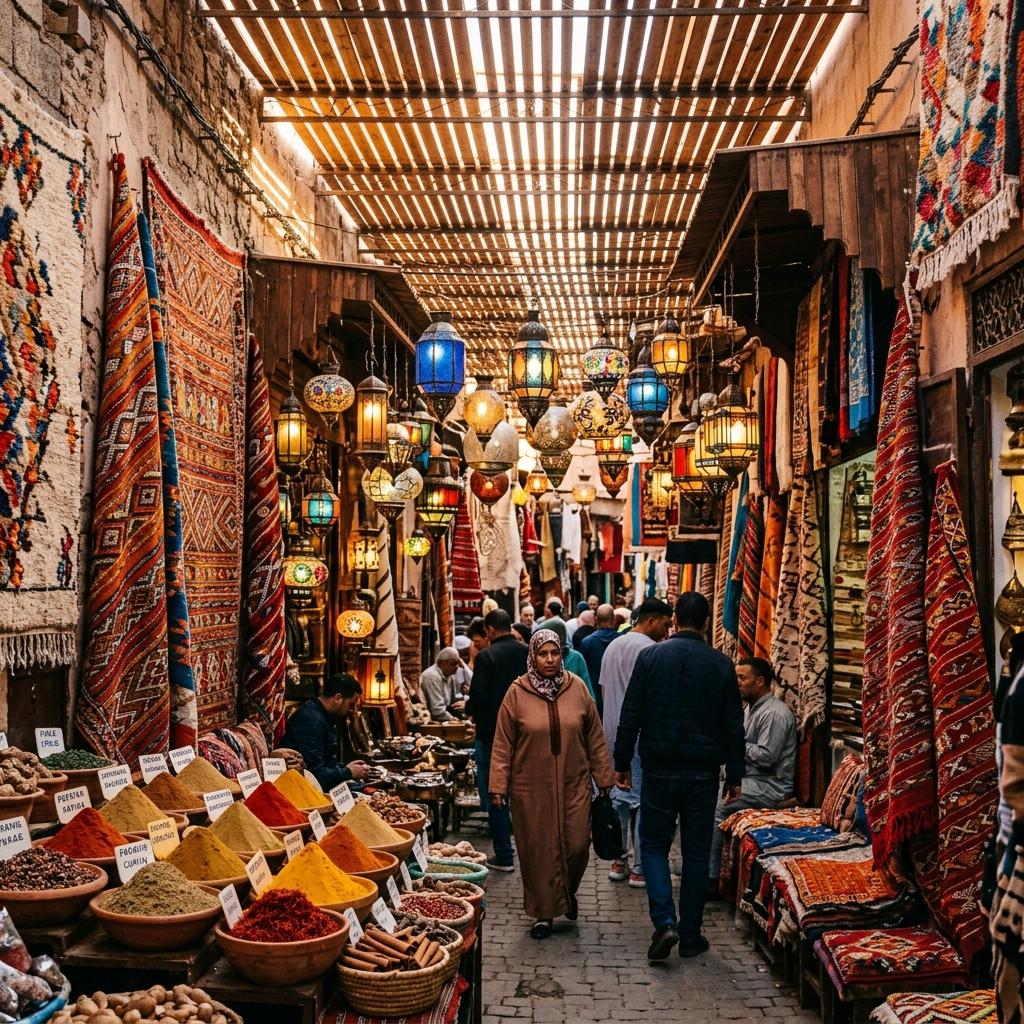
Stepping into the Medina of Marrakech is like stepping back in time. The air is thick with the scent of cumin, mint, and fresh leather. A symphony of sounds—the clinking of brass hammers, the calls of merchant sellers, and the distant bustle of Jemaa el-Fnaa—fills the narrow, labyrinthine alleys. At the heart of this ancient walled city lie the world-famous Souks of Marrakech, a sprawling network of traditional markets that have functioned as the economic and cultural engine of Morocco for nearly a thousand years.
For first-time visitors, the souks can feel both exhilarating and overwhelming. In this ultimate guide, we’ll show you exactly how to navigate this colorful maze, highlighting the top markets to visit, what treasures to buy, and how to haggle like a local. Let’s dive in!
A Brief History of the Marrakech Medina Markets
Historically, Marrakech was a crucial trading hub for caravans traveling across the Sahara Desert. Merchants brought gold, salt, spices, and fabrics, trading them for local crafts and agriculture. Over the centuries, these temporary trade camps evolved into permanent, specialized markets (souks) organized by craft. Today, each street or square is dedicated to a specific guild, from metalworkers and leather tanners to spice merchants and slipper makers.
Top 8 Souks to Visit in Marrakech
To experience the best of the Medina, you need to know where to go. Here is a breakdown of the eight must-visit souks:
1. Souk Semmarine: The Main Artery
Entering from Jemaa el-Fnaa, Souk Semmarine is the wide, covered passage that acts as the entrance to the market complex. It is lined with large shops selling high-quality carpets, antique jewelry, caftans, and brass lanterns. Because of its location, it is the busiest and most tourist-friendly souk, making it a great starting point for orientation.
2. Rahba Kedima: The Spice Square
Also known as the Place des Épices, Rahba Kedima is a vibrant, open plaza famous for its towers of colorful spices. Here you can buy fresh cumin, saffron, cinnamon, ras el hanout, and cosmetic treasures like pure argan oil, rosewater, and black soap. The square is also surrounded by charming cafés with rooftop terraces, perfect for taking a break with a cup of traditional Moroccan mint tea.
3. Souk Haddadine: The Blacksmiths’ Market
If you want to witness artisans at work, follow the metallic clanging to Souk Haddadine. In this industrial, smoky section of the Medina, ironworkers bend, weld, and hammer iron into gorgeous filigree lanterns, grates, mirrors, and candle holders. Watching them shape red-hot metal using ancient techniques is a highlight of any medina tour.
4. Souk Cherratine: The Leather Market
Marrakech is famous for its high-quality, handmade leather goods. In Souk Cherratine, you’ll find hundreds of shops selling soft leather bags, belts, jackets, wallets, and puffs (poufs). The aroma of tanned leather is strong here, and the quality is exceptional if you shop carefully.
5. Souk Smata: The Babouche Slipper Market
For a burst of pure color, head to Souk Smata, the slipper market. It is lined floor-to-ceiling with thousands of pairs of traditional Moroccan babouches—flat, pointed leather slippers. They come in every color of the rainbow, decorated with intricate embroidery, beads, and patterns. They make the perfect, comfortable souvenir to take home.
6. Souk des Teinturiers: The Dyers’ Souk
Tucked away in the northern part of the medina, the Dyers’ Souk is a visual masterpiece. Here, skeins of freshly dyed wool and silk in brilliant blues, purples, oranges, and reds are hung from wooden poles above the streets to dry in the sun. You can watch the dyers stir giant steaming vats of natural pigments like indigo, saffron, and poppy.
7. Souk des Bijoutiers: The Jewelers’ Souk
Looking for something that sparkles? The silver and gold markets are located in the historic Jewish quarter (Mellah) and within the main souk complex. Here you can purchase stunning, authentic Berber silver cuffs, filigree rings, and enamel jewelry.
8. Souk Ableuh: The Olive Market
Located right next to Jemaa el-Fnaa, this small, fragrant souk is dedicated to olives, pickled peppers, preserved lemons, and local herbs. The vendors arrange towers of green, red, and black olives in beautiful patterns. It’s a wonderful spot to sample local delicacies.
5 Essential Haggling Tips for Marrakech Souks
In Morocco, bargaining (haggling) is not just a way to buy things—it is a cultural tradition and a social interaction. Merchants expect you to bargain, and the initial price quoted is always significantly higher than the actual value. Here are five tips to help you negotiate like a pro:
- Start at 30% to 50% of the Asking Price: When a vendor quotes a price, politely counter-offer with about 30% to 50% of that number. You will gradually negotiate up to a middle ground (usually around 50% to 60% of the initial quote).
- Always Keep It Friendly and Respectful: Bargaining should be a lighthearted exchange. Smile, chat, and keep it polite. If you treat it like a battle, the merchant will lose interest. Respect their craft; if an item is handmade and took weeks to make, pay a fair price.
- Set Your Maximum Budget First: Before you begin negotiating, decide on the absolute maximum amount you are willing to pay for that item. If the price doesn’t go down to your budget, walk away.
- Be Prepared to Walk Away: The “walk-away” is one of the most powerful tools in the souks. If you thank the merchant and start walking away, they will very often call you back with a significantly lower price to secure the sale.
- Carry Cash (Moroccan Dirham): Most small shops in the souks do not accept credit cards. Always keep a pocketful of small dirham coins and notes, as vendors rarely have change for large 200 DH bills.
Navigating the Medina Labyrinth Without Getting Lost
The Medina is a maze of over 9,000 narrow streets, and getting lost is practically a rite of passage. To make your journey smoother, download an offline navigation app like Maps.me or download Google Maps offline. Standard GPS can be unreliable under the covered alleyways, but offline maps generally work well. If you do get lost, politely ask a shopkeeper for directions back to “Jemaa el-Fnaa” (the main square). Avoid asking random young men on the street, as they may demand a steep “guiding fee” to lead you out.
Experience the Souks with an Expert Local Guide
Want to explore the hidden gems of the Marrakech Medina, meet local artisans, and learn the best shopping spots without the stress of getting lost? Let Horizon Time handle the details.
Book Your Marrakech Guided Tour Now