
⚡ Quick Facts
- Elevation: 1,740 meters (5,709 feet) above sea level
- Distance: 67 kilometers (41 miles) south of Marrakech
- Travel Time: ~75 to 90 minutes by private vehicle
- Key Highlight: Gateway to Jebel Toubkal (4,167m)
- Local Culture: Indigenous Amazigh (Berber) communities
- Recommended Tour: Private Day Excursion with Horizon Time
1. What is Imlil Village?
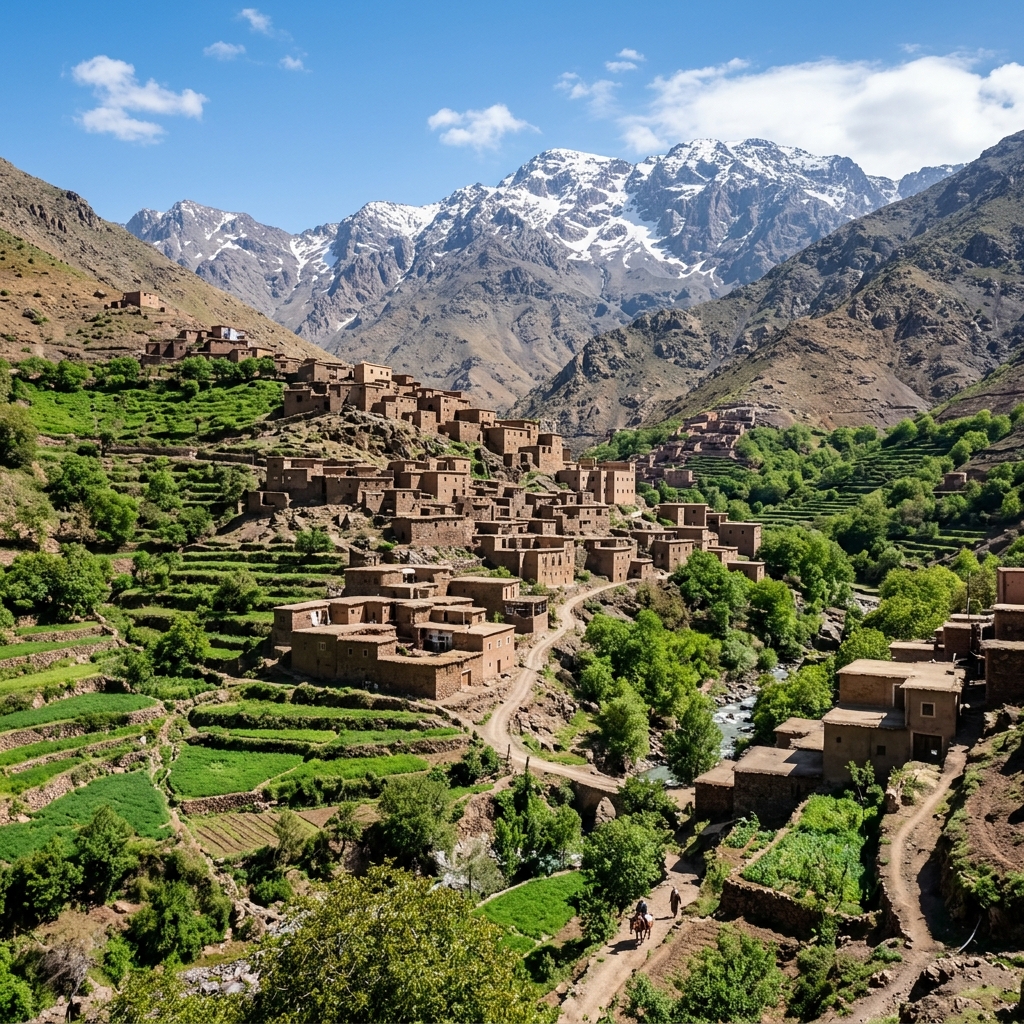
Nestled deep within the rugged amphitheater of Morocco’s High Atlas Mountains lies Imlil, a serene mountain village located at an elevation of 1,740 meters (5,709 feet). Positioned in the heart of the Mizane Valley, Imlil serves as the primary trailhead and alpine staging ground for trekkers attempting to conquer Jebel Toubkal—North Africa’s highest peak standing tall at 4,167 meters (13,671 feet).
However, defining Imlil merely as a pitstop for mountaineers misses its true charm. Imlil is a vibrant ecosystem of stone-and-mud-brick hamlets clinging to granite cliffs, surrounded by terraced walnut groves, apple orchards, and roaring mountain streams fed by melting winter snows. It represents the living heart of Morocco’s indigenous Amazigh (Berber) culture, offering travelers an immediate escape from the sensory overload of nearby Marrakech into a world dictated by the seasons, mountain air, and unhurried highland hospitality.
2. Why Visit Imlil on a Day Trip from Marrakech?
Marrakech is an intoxicating city of bright colors, bustling souks, and historic palaces. Yet, after forty-eight hours navigating the labyrinths of the Medina, almost every visitor craves space, greenery, and cool relief. An Imlil Village excursion delivers precisely that antidote in under an hour and a half of driving.
Here is why an excursion to Imlil deserves a top spot on your Morocco itinerary:
- Dramatic Climate Shift: While summer temperatures in Marrakech frequently exceed 40°C (104°F), Imlil remains comfortably crisp, with daytime averages around 24°C to 28°C (75°F to 82°F).
- Unfiltered Cultural Immersion: Unlike commercialized tourist hubs, Imlil offers genuine interactions with Amazigh families who have farmed these steep valleys for millennia.
- Accessible Outdoor Adventure: You do not need to be an expert mountaineer to enjoy Imlil. Trail networks range from gentle 45-minute strolls between hillside hamlets to challenging full-day ridge walks.
- Photographic Brilliance: Terraced fields set against snow-dusted peaks, red-clay architecture, and rushing waterfalls create unequaled photographic backdrops.
Marrakech vs. Imlil Comparison
| Feature | Marrakech Medina | Imlil Village (High Atlas) |
|---|---|---|
| Altitude | 466 meters (1,529 ft) | 1,740 meters (5,709 ft) |
| Summer Temp (July/Aug) | 38°C – 44°C (100°F – 111°F) | 22°C – 28°C (71°F – 82°F) |
| Landscape | Urban, Palms, Red Walls | Alpine Valleys, Rivers |
| Pace of Life | Fast, Bustling, Energetic | Peaceful, Rural, Tranquil |
| Primary Activity | Shopping, Sights, Food | Trekking, Culture, Nature |
3. History and Amazigh Culture of the Mizane Valley
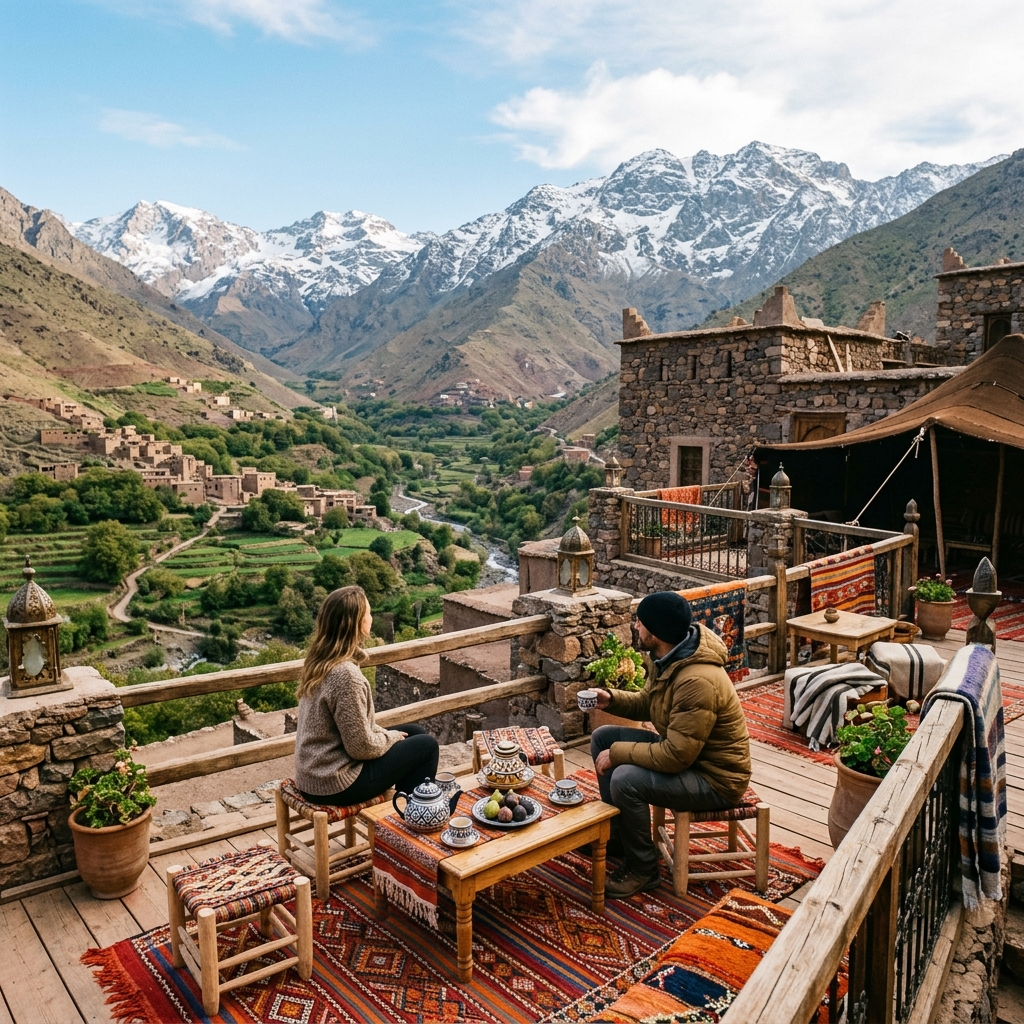
The history of Imlil is intertwined with the endurance of the Amazigh people—the indigenous inhabitants of North Africa. For centuries, the Mizane Valley was geographically isolated from the central ruling dynasties in Fez and Marrakech. This terrain fostered a self-sufficient, community-driven lifestyle built around stone masonry, canal irrigation (khattara systems adapted for mountain slopes), and transhumance pastoralism.
Historically, the valley relied on its agricultural yields: walnuts, sweet cherries, apples, and barley. It was not until the mid-20th century, during the French Protectorate era, that European mountaineers recognized Imlil’s position for ascending Toubkal. The creation of Toubkal National Park in 1942 formalized conservation efforts and placed Imlil on the global trekking map.
Pop Culture Trivia: Film director Martin Scorsese selected Imlil and the iconic Kasbah du Toubkal as key filming locations for his 1997 epic Seven Years in Tibet, using the dramatic High Atlas landscape to represent the Himalayas surrounding Lhasa.
Despite the rise of eco-tourism, local customs remain intact. The language spoken in homes across Imlil is Tachelhit (the southern Amazigh language), though local guides trained through national programs speak fluent English, French, Spanish, and Arabic. Community decisions are often still guided by the Jama’a (informal council of village elders), ensuring that village expansion respects ancestral land allocations.
4. Location and Geography
Imlil sits within the Al Haouz Province in the Marrakech-Safi region of central-western Morocco. Positioned inside the northern slopes of the High Atlas mountain range, it occupies the upper reaches of the Mizane River valley.
The geography transitions rapidly along the journey: from the flat, arid Haouz Plain surrounding Marrakech, through the olive-rich foothills of Tahnaout, past the river gorge of Asni, and finally into the granite canyon that opens into Imlil’s fertile bowl.
5. Best Time to Visit Imlil: Seasonal Breakdown
Imlil is a year-round destination, but each season brings a distinct atmosphere, visual palette, and set of outdoor possibilities.
- Spring (March to May) — Best for Blossoms & Comfortable Hiking: Lower slopes burst into pink and white blossoms as apple and cherry orchards awaken. Daytime temperatures range from 16°C to 22°C (60°F to 71°F). Snowmelt fills the mountain streams, creating waterfalls throughout the valley.
- Summer (June to August) — Best for Escaping Marrakech Heat: While lowlands swelter under intense heat, Imlil offers fresh mountain air. Daytime highs hover around 26°C to 30°C (78°F to 86°F), cooling to a pleasant 15°C (59°F) after sunset.
- Autumn (September to November) — Best for Harvest & Photography: September and October usher in the traditional walnut harvest. You will see local families knocking ripe walnuts from massive trees with long wooden poles, spreading them across rooftops to dry in the golden sunlight.
- Winter (December to February) — Best for Snow Scenery & Tranquility: During winter, snow coats the peaks above 2,000 meters, occasionally descending into Imlil village itself. Daytime temperatures range from 8°C to 14°C (46°F to 57°F).
6. Top Things to Do in Imlil Village
Whether you visit for a half-day excursion or spend a night in the mountains, Imlil provides diverse activities for all fitness levels:
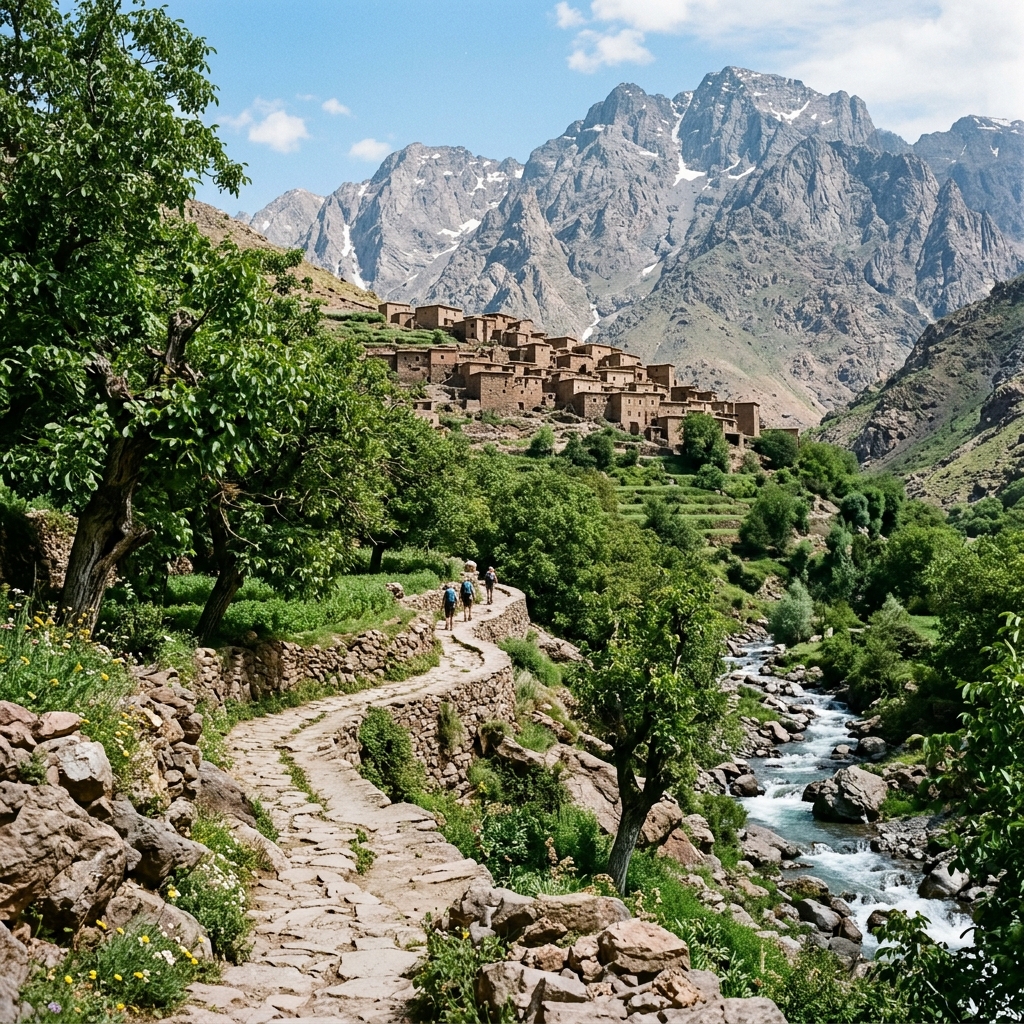
- Guided Hike from Imlil to Aroumd (Armed) Village: The walk from Imlil center up to Aroumd (1,900m) is the quintessential High Atlas hike. Leaving the asphalt road behind, follow a stone path winding past walnut orchards and ancient glacial moraines.
- Discover the Imlil Waterfalls (Cascades d’Imlil): A short 20-minute walk brings you to small cascading waterfalls fed directly by snowmelt from the upper peaks. Local vendors set up rustic wooden benches in shallow stream beds for a refreshing orange juice stop.
- Mint Tea or Lunch at Kasbah du Toubkal: Perched on a rocky promontory 100m above Imlil, this restored fortress eco-lodge offers 360-degree views across the entire Mizane Valley.
- Explore the Weekly Asni Saturday Market (En Route): If visiting on a Saturday, stop at Asni where Berber farmers from remote ridges trade livestock, fresh produce, spices, and mountain honey.
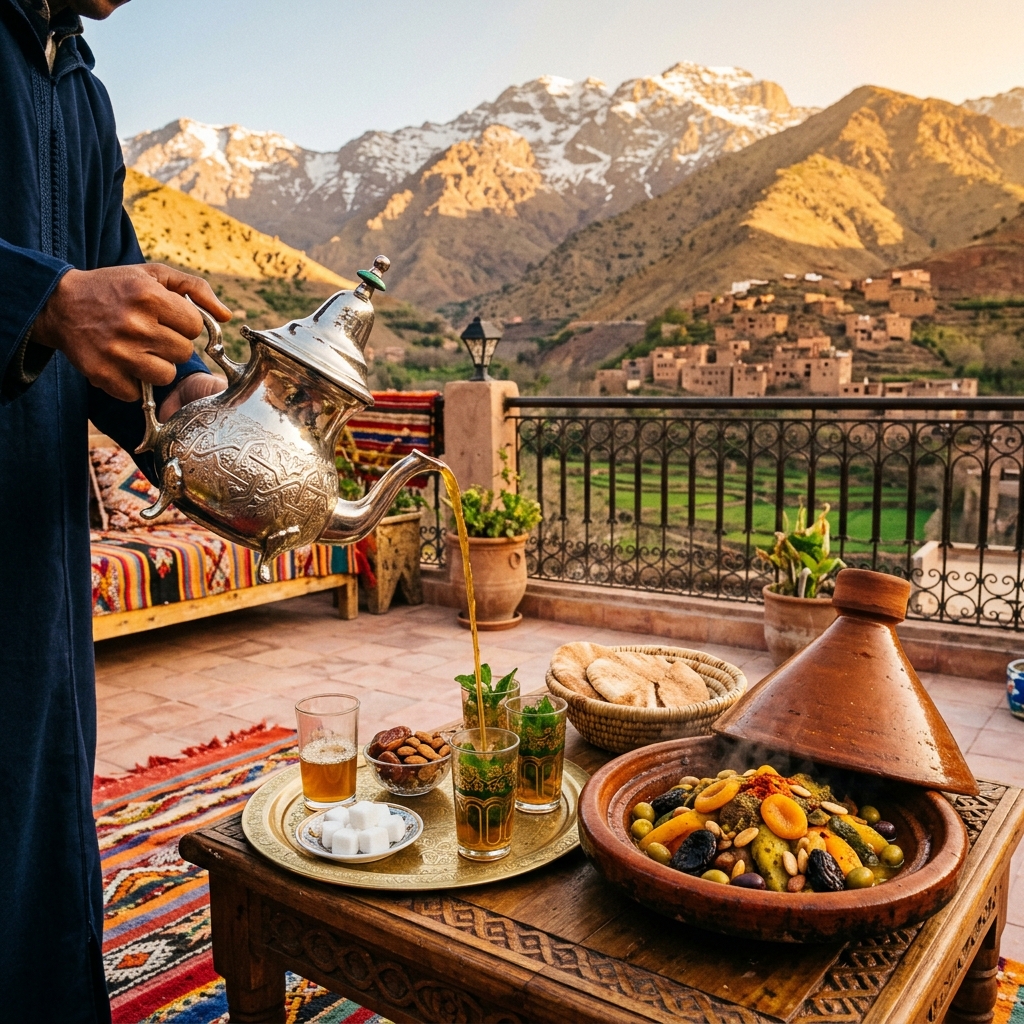
- Savor an Authentic Berber Home-Cooked Lunch: Experience dining inside a private Amazigh family home in Aroumd or Imlil with hot Tannour flatbread, pure olive oil, and slow-cooked lamb or chicken tagine.
- Family-Friendly Mule Treks: Mules equipped with padded wooden saddles offer a safe, enjoyable alternative for children and seniors exploring village trails.
7. Suggested Day-Trip Itinerary: Marrakech to Imlil with Horizon Time
⏰ Recommended Day Trip Timeline
- 08:30 AM: Private Hotel Pickup in Marrakech (Air-conditioned vehicle)
- 09:30 AM: Scenic drive through Tahnaout & Gorges of Moulay Brahim
- 10:15 AM: Optional stop at Asni Souk (Saturdays) or Argan Cooperative
- 11:00 AM: Arrival in Imlil Center (1,740m); Meet your licensed local guide
- 11:15 AM: Begin guided walk through walnut orchards toward Imlil Waterfalls
- 12:30 PM: Ascend to Aroumd Village (1,900m) enjoying Toubkal views
- 01:30 PM: Traditional Berber lunch on a private rooftop terrace
- 03:00 PM: Leisurely descent back to Imlil via alternative hillside paths
- 04:00 PM: Free time for local mint tea or browsing hand-knitted wool crafts
- 04:30 PM: Depart Imlil for the comfortable drive back to Marrakech
- 06:00 PM: Drop-off directly at your Riad or Hotel in Marrakech
8. Essential Travel Tips for Your Imlil Excursion
To ensure a smooth, enjoyable trip, keep these practical recommendations in mind:
- Physical Fitness: The walk to Aroumd requires basic fitness. Routes can be customized for flat walks or mule transport.
- Altitude Awareness: At 1,740 to 1,900 meters, altitude sickness is rare for day trips, but drink plenty of water to stay hydrated.
- Safety for Peak Trekkers: High-altitude hikes to Mount Toubkal summit require a licensed mountain guide mandated by Moroccan law.
9. What to Wear
Moroccan mountain communities are traditional. Wearing respectful attire shows courtesy while ensuring trail comfort:
- Men: Lightweight hiking trousers or long shorts; breathable shirts.
- Women: Modest hiking pants, leggings, or long skirts; loose tops covering shoulders.
- Footwear: Sturdy sneakers or trail-running shoes with good tread. Avoid flat smooth soles or sandals.
10. How to Get to Imlil from Marrakech
Booking a private tour with Horizon Time is the most comfortable way to visit Imlil. Your driver picks you up directly at your hotel in a modern 4×4 or minivan, allowing full flexibility to stop for photos along the mountain pass.
11. Prices and Budgeting
- Local Mountain Guide: 300 – 500 MAD (~$30 – $50 USD)
- Traditional Berber Lunch: 120 – 200 MAD per person (~$12 – $20 USD)
- Fresh Orange Juice: 10 – 15 MAD per glass (~$1 – $1.50 USD)
- Mule Hire with Handler: 150 – 250 MAD (~$15 – $25 USD)
12. Frequently Asked Questions
How far is Imlil Village from Marrakech?
Imlil is located 67 kilometers (41 miles) south of Marrakech. By private car with Horizon Time, the journey takes between 75 and 90 minutes each way.
Do I need a local guide for an Imlil day trip?
Hiring an official licensed mountain guide is strongly recommended to navigate trails smoothly, learn local history, and support community eco-tourism.
Is an Imlil excursion suitable for children?
Yes, Imlil is family-friendly with light walking paths, fresh air, and mule rides enjoyed by children.
What is the difficulty level of the hike to Aroumd Village?
The hike from Imlil center to Aroumd is rated easy to moderate, covering roughly 4.5 kilometers round-trip with a gentle 160-meter elevation gain.
Can I see snow in Imlil?
Snow covers upper mountain peaks from November through April, and occasionally falls in Imlil village during peak winter months (Dec–Feb).
13. Book Your Imlil Village Excursion with Horizon Time
Ready to Explore the High Atlas Mountains?
Experience the beauty, fresh alpine air, and authentic Berber hospitality of Imlil Village with Horizon Time.