Why the Order of a Marrakech City Tour Matters
Seven monuments, one day: the difference between a Marrakech city tour you'll remember and a blur of courtyards is sequencing. Most visitors do the city backwards. They start at Jemaa el-Fnaa because the hotel is nearby, follow the first self-appointed guide who offers his services, queue forty minutes at Majorelle in the flat 2 PM light, and end the day wondering why every palace looked the same.
A Marrakech city tour itinerary isn't a list of stops — it's a strategy about light, heat, and crowds. The plan below is the order we run when Mustapha builds a private city day: it respects what opens when, what crowds at which hour, and which monuments deserve your sharpest attention before fatigue sets in.
Run it yourself if you like. Or hand it to a licensed guide and a private driver, which is exactly what our full-day private Marrakech city tour does.
The one-day plan at a glance
- 9:30 AM — Jardin Majorelle (timed tickets; book the day before)
- 10:30 — Koutoubia Mosque gardens and the Kasbah approach
- 11:15 — Saadian Tombs before the midday queue
- 12:00 — El Badi Palace ruins
- 1:00 PM — Lunch in the Kasbah quarter or the medina
- 2:15 — Bahia Palace (the cool interior hours)
- 3:15 — Ben Youssef Madrasa
- 4:15 — Menara Gardens at the day's soft light
- Evening — Jemaa el-Fnaa after dark, when the square becomes itself
Morning: Majorelle First, Then the Kasbah Cluster
Jardin Majorelle is the single highest-demand ticket in Marrakech — timed entry, sells out days ahead, and the crowd math after 11 AM is brutal. Go first or don't go at all. The cobalt-blue villa, the cactus and bamboo collections, the bougainvillea over every wall: all of it rewards the quieter hour, and the morning light on that particular blue is the color you actually came for. Give it a proper hour, not the rushed twenty minutes a group tour allows.
From Majorelle, cross town to the Koutoubia. A note that surprises most first-timers: you can't go inside — Moroccan mosques are closed to non-Muslims everywhere outside Casablanca's Hassan II. But the gardens and the 12th-century minaret are the open-air half of the visit, and the tower is the best first story of how this city was founded. A good Marrakech city tour guide (or a good guidebook) covers the Almohad city beneath it in twenty minutes that reframes everything else you'll see all day.
The Kasbah monuments, back to back
- Saadian Tombs — sealed for three centuries, rediscovered by chance in 1917, and home to the single most ornate room in Marrakech: the Chamber of the Twelve Columns, Carrara marble and gold leaf at the peak of Moroccan funerary art. Queues form by midday; 11 AM is the quiet window.
- El Badi Palace — five minutes on foot from the tombs. Sultan Ahmed al-Mansur's 'incomparable' palace is a ruin, but a magnificent one: sunken orange orchards, rampart views, stork nests on the walls. Less ornament, more scale — the contrast with the tombs is itself the lesson.
- Lunch — stay in the Kasbah or drift toward the medina. A proper tagine near the monuments beats a generic tourist table near the square every time.
Afternoon: Bahia Palace and Ben Youssef Madrasa
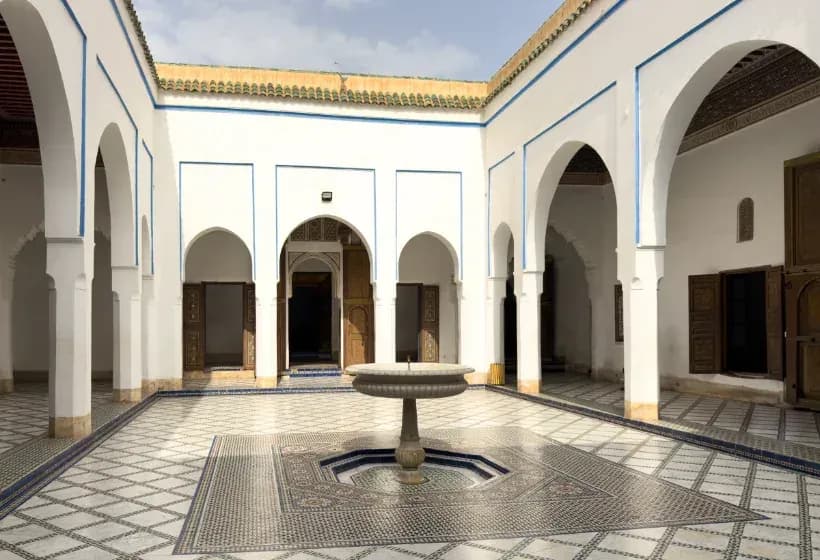
The two great interiors belong in the afternoon — when you want shade and your attention is still sharp enough to catch details. Bahia Palace is the city's finest intact royal residence: a sequence of courtyards built by a grand vizier who was, on most days, more powerful than the sultan he served. The zellij floors, carved stucco and painted cedar ceilings took the best craftsmen of Fez over a decade — this is the stop where a guide earns their fee, because every surface has a meaning and none of it is written down.
Ben Youssef Madrasa, ten minutes north into the medina on any self-respecting Marrakech medina walking tour, is the counter-argument in architecture: a 14th-century Quranic college where up to 900 students once lived in cells around one of Morocco's most beautiful courtyards. It's smaller than Bahia, denser, and for many visitors the finest room in the city — the Marinid cedar and stucco at their absolute peak. A ben youssef medersa walking tour on its own would be thin; paired with Bahia, it completes the story.
The honest ranking
- Most beautiful single room: the Saadian Tombs' Chamber of the Twelve Columns
- Best overall palace: Bahia — intact, layered, alive
- Best architecture: Ben Youssef Madrasa
- Best for photographers: Majorelle early, El Badi late
- Most underrated: the Koutoubia gardens — free, calm, and the minaret frames nine centuries of the city
Photography note: interior light in Bahia and the madrasa is dim. Raise your ISO rather than fighting it with flash — flash isn't allowed anyway.
The Souks: Marrakech's Hidden Gems Between the Monuments
Here's what the formal itineraries skip: the walk between Ben Youssef Madrasa and the rest of the medina is itself a monument. The souks north of Jemaa el-Fnaa — the carpet shops of the Rahba Kedima, the metalworkers' lanes, the dyers' street where yarn hangs drying above your head — are where a marrakech city tour private guide proves their worth, because this is the part no map navigates and no museum sign explains.
If you're building your own bahia palace and souks tour day, slot forty minutes here after the madrasa. Not for shopping — for watching. The crafts still work the way they worked a century ago: the dyers hang wool in the same lanes, the metalworkers hammer the same lanterns, and a guide who grew up a few doors down can get you into workshops the tour buses never find. That's the marrakech hidden gems cultural tour version — the same city, seen from inside.
Jemaa el-Fnaa, for the record, is best left for the evening. The famous square in daylight is a big, sun-baked plaza with juice stands. Come back after dark and it's a different city entirely: food stalls firing up by the hundred, storytellers holding circles, the drums and the smoke and the energy that made it UNESCO-listed. Whatever you do, don't waste your best afternoon hours on its daytime face.
Late Afternoon: Menara Gardens and the Atlas
Menara Gardens is the calm ending the day needs — and the light is why it's last. The 12th-century royal garden west of the medina is a working olive grove around a vast reflecting basin, the green-roofed pavilion on the far side and the Atlas Mountains filling the horizon behind it. In late afternoon the water takes the color of the sky and the photo everyone takes becomes the one you should take.
It won't be silent — Moroccan families come here at the same hour for the same reason — but it's a different kind of quiet: open air, olive shade, room to breathe after the medina's enclosed intensity. Thirty unhurried minutes, and a Marrakech city tour itinerary that began in a cobalt garden ends at a green one. Symmetry isn't accidental.
Guide or Self-Guided: The Honest Answer (Is Marrakech Worth Visiting Without One?)
You can run this itinerary alone — and if you're the type who reads every plaque, you might not need us. The monuments are navigable, the route is logical, and Marrakech is manageable with a map and patience. We'd rather say that honestly than sell you a day you don't need.
What a guide changes is what you *understand*, not what you see. Bahia Palace without context is a pretty courtyard. With a marrakech city tour private guide, it's a vizier who outbuilt his sultan, the artisans who spent fifteen years on its ceilings, and the conqueror who later stripped it bare. The tombs are marble and gold alone; with a guide they're a dynasty and a cover-up. That context is the product — which is why our private Marrakech cultural tour includes the official licensed guide for the whole day, not as an hourly extra.
And for the skeptical: yes, Marrakech is worth visiting. It's worth it alone and it's worth it more with a guide — the city's monuments are genuinely world-class, and they're also genuinely meaningless without context. Is Marrakech worth visiting with kids? It's one of our easiest recommendations — history made walkable, fountains and gardens for pauses, no long drives. Is Morocco safe for families? Marrakech is its most-visited, most-tourist-ready city; a private guided day is the most comfortable way to experience it.
Who books the guided version
- First-time Marrakech visitors who want the city to make sense, not just look good
- Families — the pace bends to the kids and the logistics disappear
- Anyone on a short stay: one day is enough with a guide, tight without
- Visitors who'd rather spend the day experiencing than navigating
Half Day or Full Day — and What to Skip
Real talk: not everyone has seven hours. If your Marrakech time is genuinely short, the honest trim is: keep Majorelle, Bahia Palace, and Ben Youssef Madrasa. Those three are the city's argument for existing. A luxury Marrakech city tour at half pace beats a full-day blur — three monuments properly seen outperform seven rushed.
What drops first, honestly: El Badi (a ruin — beautiful, but a ruin; the tombs cover the same dynasty with ornament intact), then Menara (a garden — lovely, but a garden; Majorelle is the better one). The Koutoubia exterior takes twenty minutes and costs nothing; it stays regardless.
What never gets cut: Bahia and Ben Youssef. If your historic marrakech city tour covers only two monuments, those are the two.
Tickets, Dress and Logistics
Entrance tickets (paid on site, in dirhams)
- Jardin Majorelle ~170 MAD (timed entry — book online the day before)
- Bahia Palace ~100 MAD
- Saadian Tombs ~100 MAD
- El Badi Palace ~70 MAD
- Ben Youssef Madrasa ~50 MAD
- Koutoubia and Menara Gardens: free
What to wear and bring
- Comfortable walking shoes — roughly 4–5 km of uneven medina lanes
- Shoulders and knees covered out of respect (politeness, not a hard rule)
- Hat, sunglasses, sunscreen — the open courtyards are unshaded
- Cash in dirhams: card machines are rare at ticket windows and souks
- Winter: a layer for the morning; the monuments are unheated
Timing honesty
- The 9:30 start exists because Majorelle's slots and the cool air both reward it — not arbitrary
- Some monuments close on religious holidays; a guided day reroutes, a solo day improvises
- The souks fit between Ben Youssef and Menara if you'd trade a garden for workshops — on a private tour, that's a one-sentence adjustment
Más guías de viaje y ensayos
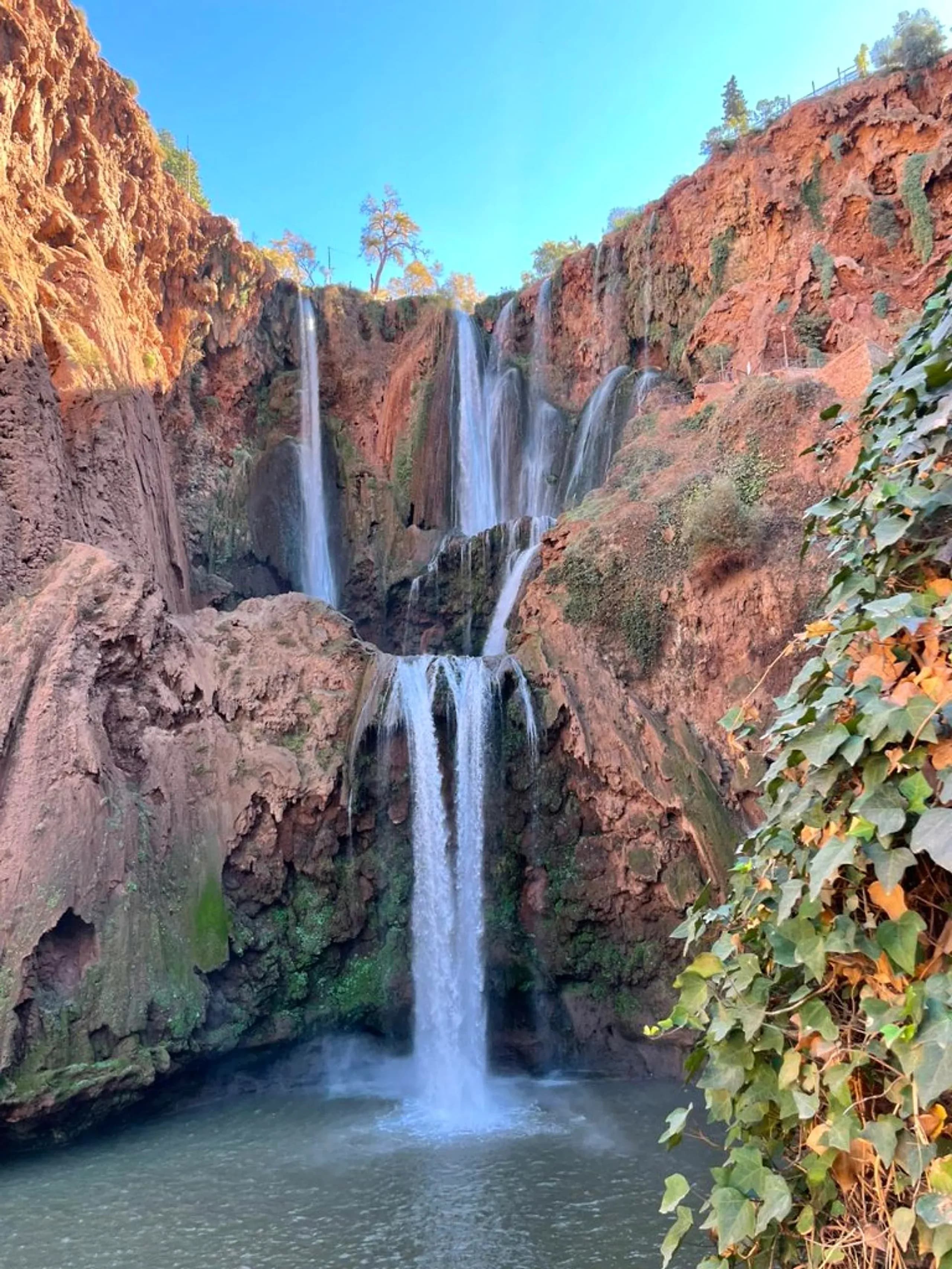
Guía de las cataratas de Ouzoud: las cataratas más altas de Marruecos y la verdad sin tapujos sobre el trayecto en coche
Leer la guía histórica completa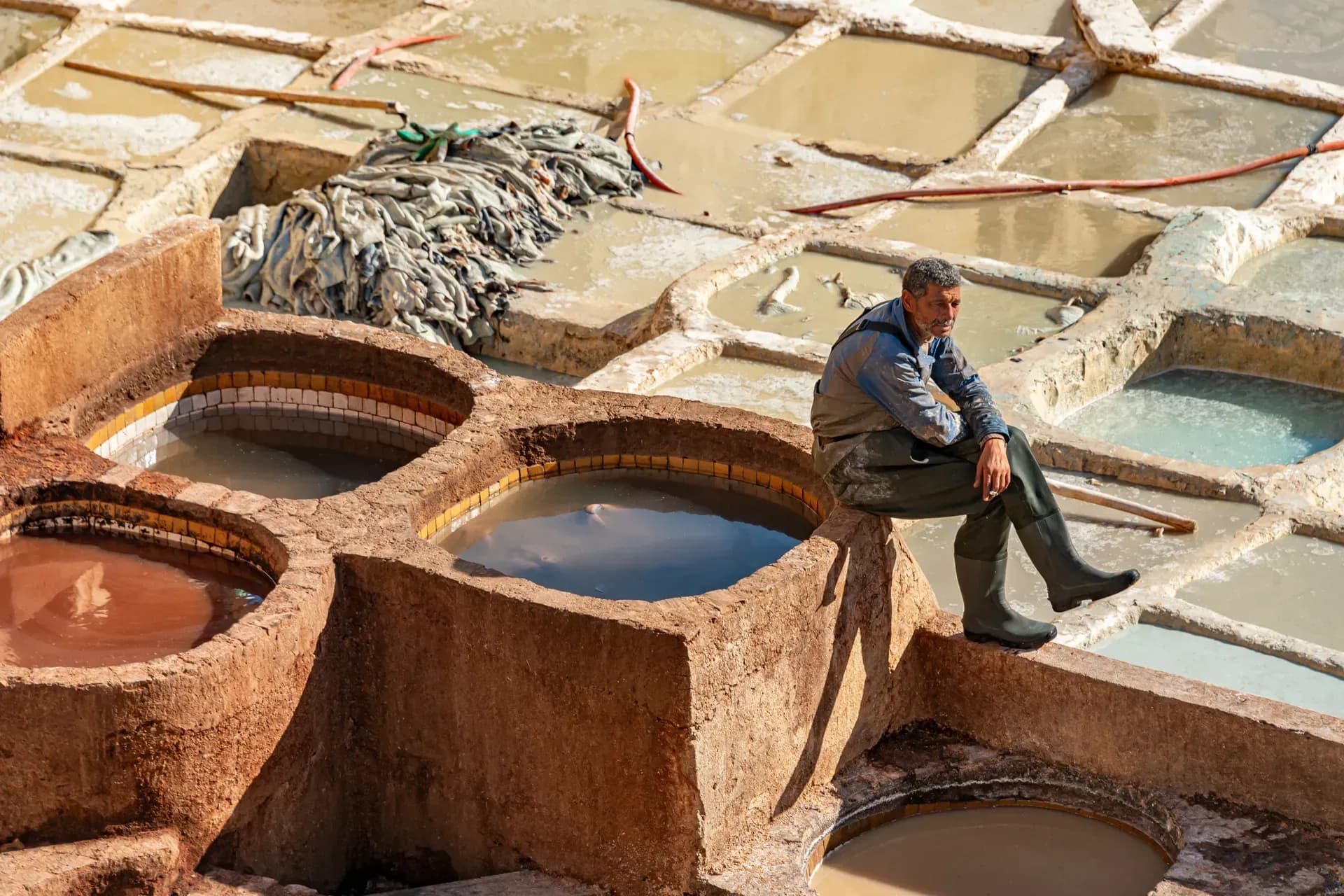
Fez, Marruecos: la guía sincera sobre la medina más antigua del mundo (y si merece la pena visitarla)
Leer la guía histórica completa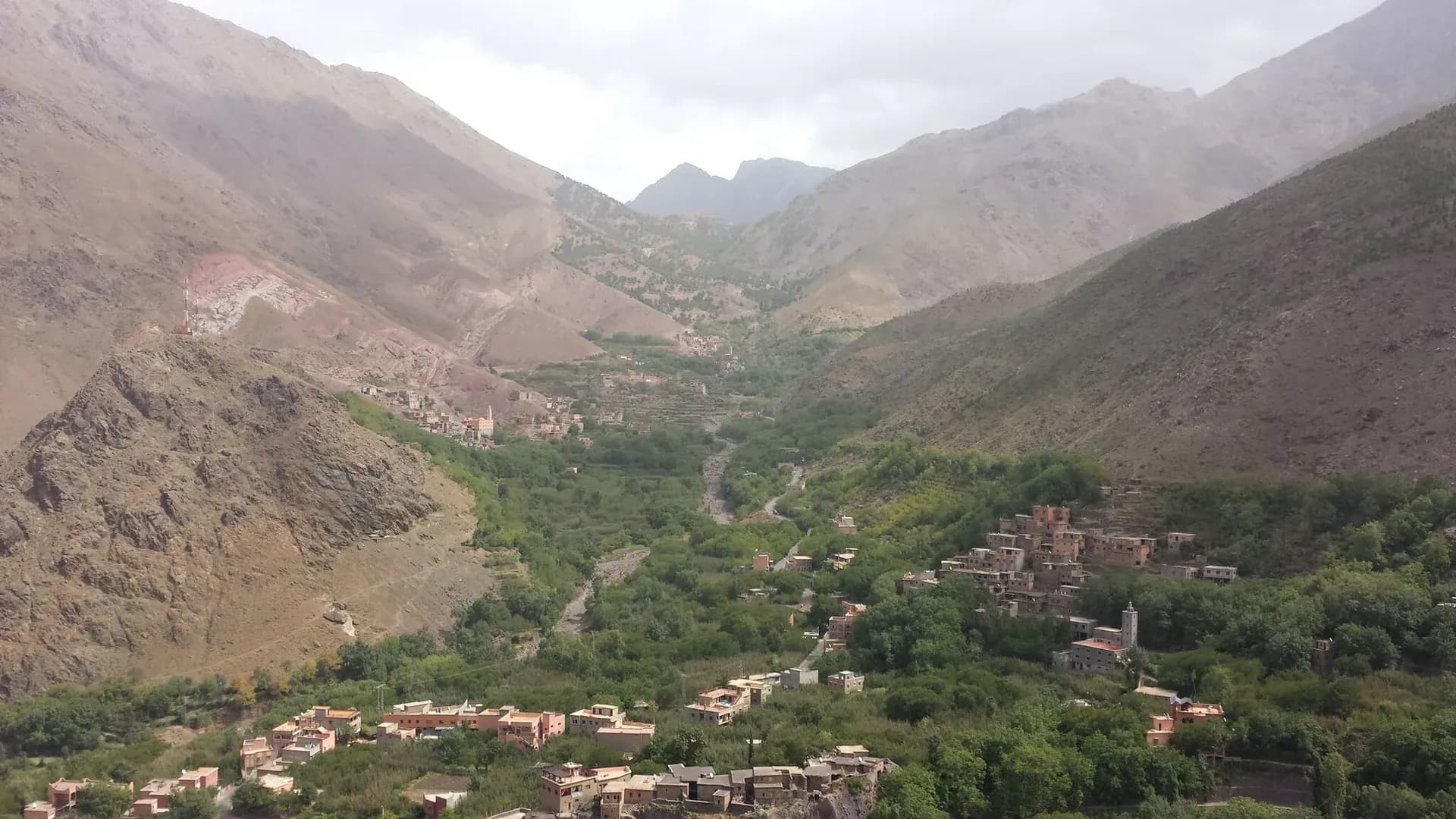
Itinerario de 7 días por Marruecos: la forma más realista de pasar una semana (desierto, Atlas y costa)
Leer la guía histórica completaPreguntas frecuentes
¿Merece la pena hacer una visita guiada por la ciudad de Marrakech?
Sí, para una primera visita: la medina es un laberinto, los monumentos tienen una historia auténtica y, con un guía autorizado y un medio de transporte privado, se pueden visitar palacios, zocos y jardines en una sola jornada bien aprovechada.
¿Cuánto tiempo dura un recorrido completo por la ciudad de Marrakech?
Una excursión típica de un día dura entre 6 y 8 horas y recorre el Palacio de la Bahía, la madraza de Ben Youssef, los zocos, el Jardín Majorelle y la plaza Jemaa el-Fna; también hay opciones de medio día.
¿Qué ropa debo llevar en Marrakech?
Ropa ligera y discreta que cubra los hombros y las rodillas; calzado cómodo para pasear por la medina; un sombrero y protector solar, ya que en la ciudad hace mucho sol la mayor parte del año.
Visita estos lugares en una excursión privada
Descubre los lugares emblemáticos que aparecen en esta guía con nuestros conductores profesionales con licencia, servicio de recogida puerta a puerta en el hotel y vehículos 100 % privados con aire acondicionado.
Visita privada a la ciudad de Marrakech: Palacio de la Bahía, Madraza de Ben Youssef, Tumbas de los Saadíes y Majorelle
Visita cultural privada de día completo · Guía oficial autorizado · Jardín Majorelle · Koutoubia · Tumbas de los Saadíes · Palacios de El Badi y La Bahía · Madraza de Ben Youssef · Jardines de la Menara
Excursión de un día a Imlil desde Marrakech: pueblos del Alto Atlas, Armed y el monte Toubkal
Escapada privada a la montaña · Gargantas de Moulay Brahim · Valle de Asni · Paseo guiado por un pueblo bereber · Aldea Armeda · Vistas a la Kasbah del Toubkal · Almuerzo con una familia bereber incluido
Excursión de un día al valle de Ourika desde Marrakech: cascadas de Setti Fatma y pueblos bereberes
Escapada privada al Alto Atlas · Cooperativa de aceite de argán · Té a la menta en una casa bereber · Excursión opcional a la cascada de Setti Fatma · Tajín a orillas del río · Lunes: zoco de Tnin Ourika