The 07:00 Gamble: Is Ouarzazate Worth One Day?
Eight hours of mountain road for one perfect fortress: here is the honest math. It starts with the photos: red mudbrick towers against snow-dusted Atlas, the kind that stop your scrolling. Then comes the itinerary fine print: 07:00 pickup, return near 19:30, most of the middle spent climbing and descending the same pass twice.
We run this road weekly, so no sales pitch: the ksar repays the drive, the drive demands respect, and the verdict section below tells you exactly who should go and who should take the 3-day loop instead.
The day at a glance
- 07:00 hotel pickup in Marrakech, return 19:00–19:30
- ~200 km / 3.5–4 hrs each way via the N9 and the Tizi n'Tichka pass (2,260m)
- Ksar Aït Ben Haddou climb, Taourirt Kasbah, Atlas Film Studios sets
- 100% private: stops on demand, air conditioning that works, driver who knows every viewpoint
Who this day is built for
- First-time Morocco visitors with no spare night and one non-negotiable fortress
- Film-location pilgrims: four productions, two studios, one backlot, zero CGI
- Photographers chasing red clay against snow-line Atlas: winter mornings deliver both
Shared-bus versions of this day exist and they run on other people's bladder schedules. Private means the driver stops when the light does.
Energy budget, honestly stated: two strong viewpoint hours before lunch, a slower hot afternoon, and a golden final descent. If that rhythm sounds like your kind of day, book it. Bring curiosity and a charged camera: the pass handles the rest.
Crossing the Tizi n'Tichka Before the Buses
The pass is the first sight, not the obstacle. Route N9 leaves the Haouz plains and starts stacking switchbacks almost immediately. Our first leg-stretcher is a Berber village stop, Ait Ben Barka and its neighbors, where rural Atlas life runs at donkey pace and the terraced fields drop into the valley.
By mid-morning you're at the 2,260-meter summit viewpoint, the highest major paved pass in North Africa, looking down the serpentine descent you are about to drive. Winter travelers get a bonus shock: snow, real snow, an hour from palm trees. Roadside stalls sell amethyst geodes and fossil slabs along the whole climb: browse freely, buy in Rissani if at all, where the same stones cost half.
The descent drops through juniper forest into red-earth villages stacked up impossible slopes. Every hairpin has a viewpoint and our drivers know which three are worth the brake pedal.
Pass rules
- Layers live in the daypack, not the trunk: the summit runs 10–15 degrees cooler than Marrakech, year-round
- Front seats for the motion-sensitive: the descent is 100+ curves of pure switchback
- The early start isn't cruelty, it's strategy: you cross before the tour-bus convoys and reach the ksar before the heat
Ksar Aït Ben Haddou: Climb It Properly
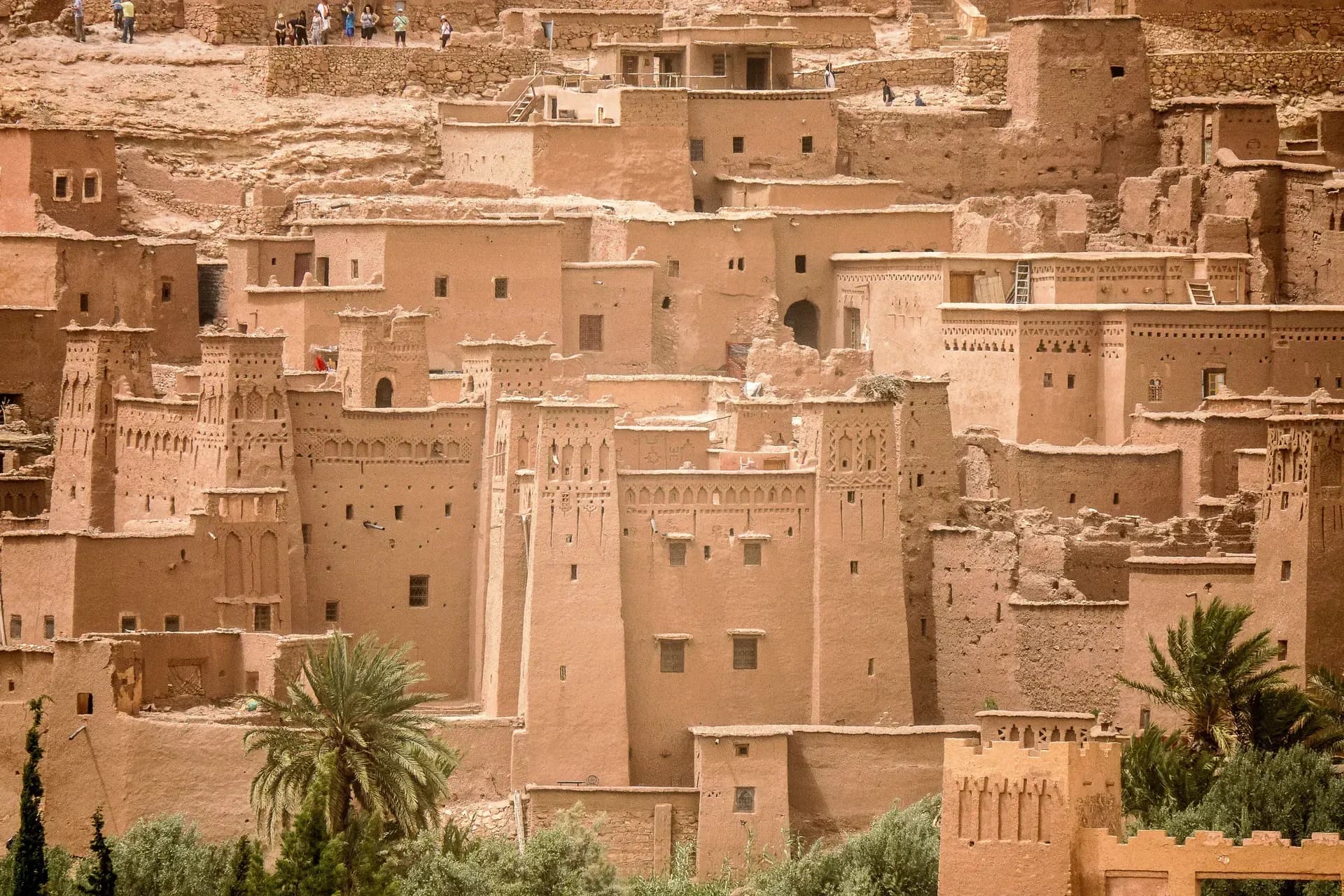
The most photographed mudbrick in Morocco deserves every pixel. Ouarzazate (say war-zazat) calls itself the Door of the Desert: past it, the Sahara spreads 9 million square kilometers. But the fortress 30 km before town is the reason you came: a UNESCO-listed ksar raised over centuries of trans-Saharan caravan traffic, sitting improbably green in its palm valley.
Hollywood keeps paying the location fee for a reason: Lawrence of Arabia, The Mummy, Gladiator and Game of Thrones all shot these lanes. You will walk streets where film crews still leave faux-Egyptian facades standing between real family homes.
The climb, step by step
- Cross on foot from the new village side: the riverbed route, not the bridge, when water is low
- Climb the mudbrick lanes to the hilltop granary for the 360-degree oasis view; allow 2 unhurried hours
- Entry to the ksar is free; licensed local guides wait at the crossing and work for tips: take one for the hidden mosque and old oil press
- Lunch on a terrace facing the walls: slow tagine, fast view
The ksar behind the postcard
- Most families moved across the river to the new village decades ago: the old ksar holds a handful of residents, artists' studios and guesthouses
- The hilltop agadir was the community vault: grain, valuables and manuscripts behind collective walls, defended by position alone
- Painters and weavers work in the lanes; the carpet cooperatives here unroll without pressure, a low-key rehearsal for Marrakech souks
- The green paradox is literal: the Ounila river keeps palms and barley alive at the foot of sun-baked pisé: photograph it from the granary, not the parking lot
- Tempted to stay? Ksar-side guesthouses put sunrise over the walls outside your window: the standard first night of every 3-day loop for exactly this reason
Be inside the walls before 10:30: granary light is golden and the day-trip crowds are still on the pass.
Taourirt Kasbah and the Film Studios
Ouarzazate town itself is a working desert town, not the attraction: the kasbah and the studios are. Adjust expectations accordingly and you'll love both.
Taourirt was the palace-fortress of the Glaoui clan who ruled the south: a maze of staircases, shaded courtyards and some of Morocco's best-preserved painted plaster and cedar ceilings. Thami El Glaoui, Pasha of Marrakech from 1912 to 1956 and once among the country's most powerful men, received French generals and foreign dignitaries in these very rooms. One unhurried hour, preferably before the afternoon heat pools in the courtyards.
On the backlot
- Atlas Film Studios ranks among the largest studio complexes in Africa: Egyptian temples and Tibetan monasteries share one dusty backlot
- You walk the sets freely: linger on the Gladiator streets, glance into the rest
- Props, half-built facades and painted horizons everywhere: the most honest look at movie magic in Morocco
- Allow one hour; the on-site museum fills the gaps between the facades
- Visits run as guided rounds, not free wandering: the guides are studio crew and the anecdotes are first-hand
- Lunch is in town between the two: tagines built for hungry drivers, couscous on the right day
Kasbah first, studios second: the kasbah's thick walls are the coolest rooms in Ouarzazate after 14:00.
Worth It? The Honest Math
No version of this day involves less than 8 hours in a car. The Tizi n'Tichka winds both ways, the curves punish the motion-sensitive, and even road-trip lovers feel the last hour. Say it plainly: this is a lot of traveling for one day.
So who takes it? First-time Morocco visitors with no spare night, film-location pilgrims, and anyone for whom the ksar is a non-negotiable. The views genuinely carry the hours (Atlas, Ounila Valley, ksar, studios) and a private driver (stops on demand, no bus schedule tyranny) halves the pain of the public-transport alternative.
Motion-sensitive? Say so at booking: front seat, extra summit stops and ginger tea at every terrace: the pass is entirely manageable with the right seat and pace.
The upgrade path is genuine, though. Our 3-day Merzouga loop covers the same ksar without the same-day return drive, then keeps going to Todra Gorge and a luxury Erg Chebbi camp. Same fortress, one-third of the Day-1 driving, plus dunes. If your calendar has 3 days, take them. Stuck at 2? The Zagora overnight breaks the drive with a desert sunset: smaller dunes, honest trade, half the road back.
Packing, Roads and Getting There
Departures leave at 07:00: non-negotiable if you want the ksar before crowds and heat. Private 4x4 or minivan, dedicated chauffeur, fuel and door-to-door pickup are in our format; the day ends where it started, at your riad door.
Packing list
- Broken-in walking shoes: ksar lanes are uneven mudbrick and the granary climb is steep
- Sunglasses and sun hat: the light bounces off clay and sand alike, even in winter
- A warm layer: the pass is cold mornings and winters bring real snow
- Loose, shoulder-covering clothing: respectful and cooler than shorts
- Small backpack with water; refill at lunch
- French and Arabic open every door; your driver translates the rest: English everywhere on the tourist circuit, smiles everywhere off it
The three ways down
- Private driver: stops where you point, AC that works, zero schedule math: the format this guide assumes
- Rental car: the N9 is paved and fine, but the pass rewards mountain-driving experience and Marrakech exits are chaotic
- Bus: 4.5 hours each way on fixed departures: cheapest, and the quickest way to turn 8 driving hours into 10
- Winter self-drivers: the pass can ice overnight: cross after 09:00 and never at night, or hand the keys to a driver and watch the snow instead
Booking notes
- Dates shift free of charge up to 48 hours before departure
- Tell us dietary needs when booking: vegetarian and gluten-free tagines are standard, not a favor
Más guías de viaje y ensayos
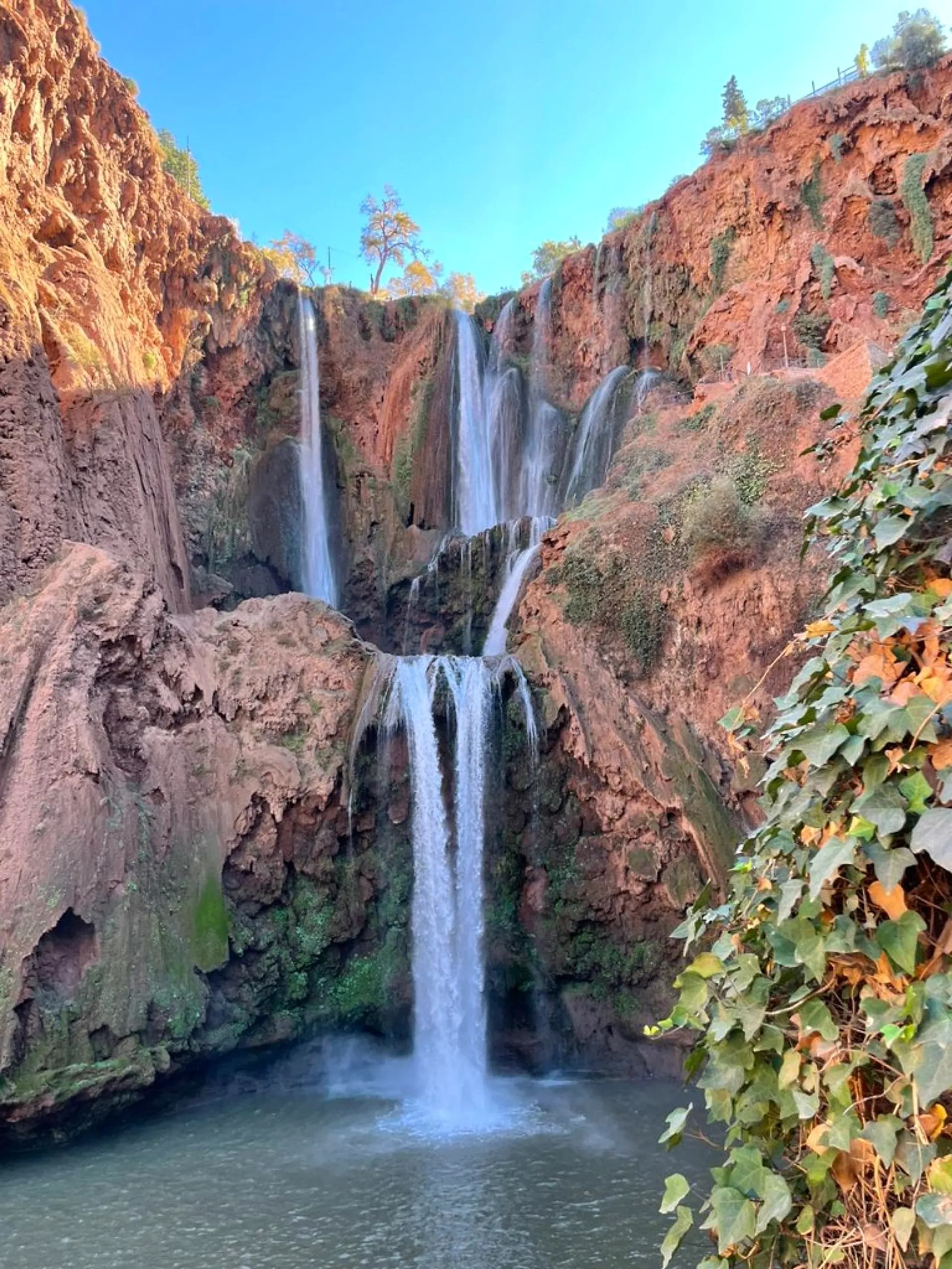
Guía de las cataratas de Ouzoud: las cataratas más altas de Marruecos y la verdad sin tapujos sobre el trayecto en coche
Leer la guía histórica completa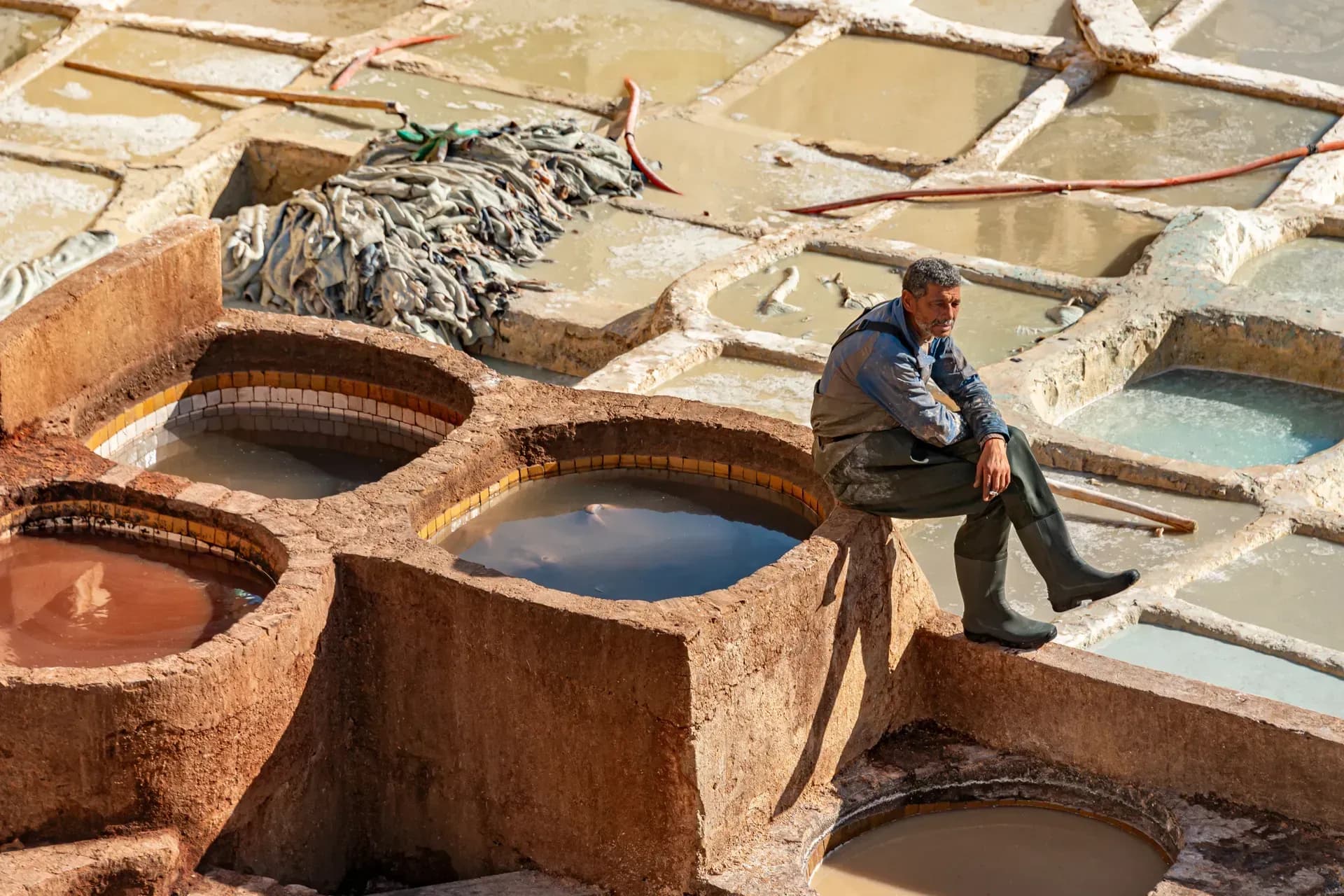
Fez, Marruecos: la guía sincera sobre la medina más antigua del mundo (y si merece la pena visitarla)
Leer la guía histórica completa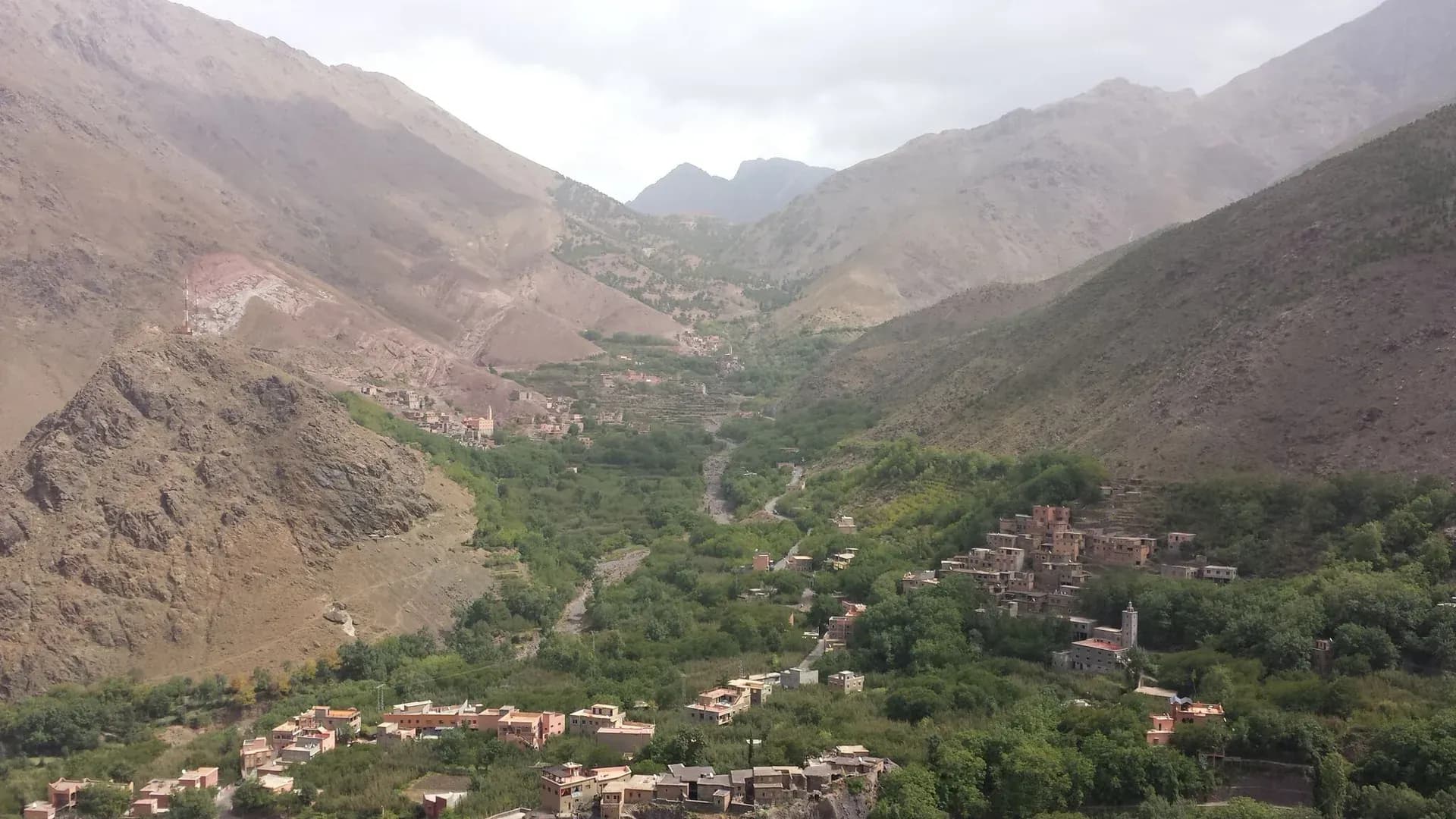
Itinerario de 7 días por Marruecos: la forma más realista de pasar una semana (desierto, Atlas y costa)
Leer la guía histórica completaPreguntas frecuentes
¿Merece la pena el largo trayecto en coche para hacer la excursión de un día a Ouarzazate?
Sí, si quieres visitar Aït Ben Haddou y el plató de rodaje de Marruecos, pero son más de 200 km de ida y vuelta por el puerto de Tizi n'Tichka. Un día completo y agotador; no apto para viajeros propensos al mareo.
¿Cuánto tiempo se tarda en ir en coche de Marrakech a Ouarzazate?
Unas 4 horas en cada sentido atravesando el Alto Atlas por el paso de Tizi n'Tichka (2.260 m): un trayecto espectacular, pero con muchas curvas. Pasar la noche en Ouarzazate es la alternativa más cómoda.
¿Se puede visitar Aït Ben Haddou de forma gratuita?
Se puede pasear libremente por el ksar; hay guías locales que ofrecen visitas guiadas opcionales por un módico precio. En algunas casas se cobra una entrada de entre 10 y 20 MAD para subir al mirador del granero.
¿Qué películas se han rodado enOuarzazate?
«Gladiator», «Juego de Tronos» (Yunkai en Aït Ben Haddou), «Lawrence de Arabia», «La momia» y muchas más: Atlas Studios es el complejo de estudios cinematográficos más grande de África.
Visita estos lugares en una excursión privada
Descubre los lugares emblemáticos que aparecen en esta guía con nuestros conductores profesionales con licencia, servicio de recogida puerta a puerta en el hotel y vehículos 100 % privados con aire acondicionado.
Excursión de 3 días de Marrakech al desierto de Merzouga: campamento de lujo en el Erg Chebbi y paseo en camello
Alto Atlas (2.260 m / 7.415 pies) · Ksar Aït Ben Haddou (Patrimonio de la UNESCO) · Gargantas del Dades y del Todra · Campamento de lujo en Erg Chebbi · Circuito por el valle del Draa
Excursión de 4 días de Marrakech al desierto de Merzouga: campamento de lujo en Erg Chebbi y paseo en camello
Circuito sin prisas de 4 días por el Sáhara · Alto Atlas · Ksar Aït Ben Haddou · Garganta del Todra · Campamento de lujo en Erg Chebbi · Khamlia: Gnawa y nómadas · Valle del Draa y Ouarzazate