The Honest First Thing: Ouzoud Is Worth the Drive — for the Right Traveler
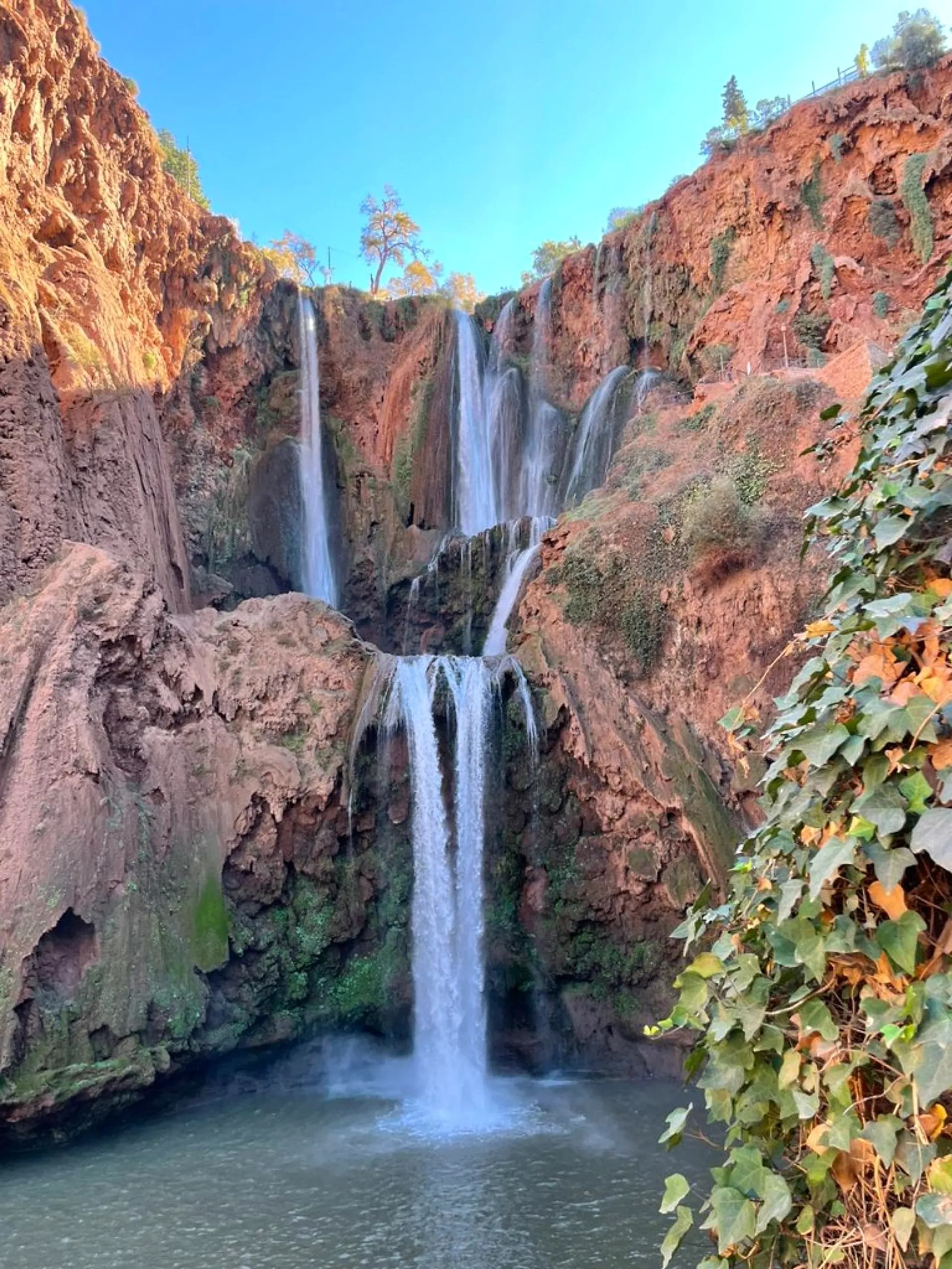
The Ouzoud waterfalls are the tallest and most spectacular falls in Morocco: three tiers dropping 110 meters into the El Abid gorge, ringed by olive groves and wild Barbary macaques. They're also 150 km from Marrakech — and that distance is the whole decision.
Here's the honest framing nobody puts on the booking page: Ouzoud is not a half-day. It's roughly 2.5–3 hours each way through the flat Tadla plains, which means the falls are a full day, door to door. On a four-day Marrakech stay, it's the best single natural sight you can add. On a two-day sprint where you also want the souks, the palaces and an evening in the medina — it's the wrong priority. We'll say that clearly, because we'd rather have you on the right trip than on any trip.
What you get in exchange for the drive is genuinely the best waterfall experience in the country: not a trickle down a cliff, but a thundering three-stage cascade you can walk to, boat underneath, and photograph from a dozen angles — with wild monkeys, rainbow mist and terrace cafés thrown in.
Getting There: The Drive Is the Price of Admission
150 km northeast of Marrakech, through the agricultural Tadla plains. About 2.5–3 hours each way.
Your three realistic options:
- Private driver (what we run) — door-to-door pickup, leave when you like, coffee and photo stops on the road, and your driver walks the falls route with you. For a 6-hour round trip, comfort matters.
- Shared group tour — the cheapest way, and how most visitors go. Expect hotel pickup loops that add an hour, a fixed return time, and 15–25 people at the viewpoint with you.
- Rental car — doable and the road is easy, but you lose the local context, pay fuel + tolls, and arrive tired for the steps.
One warning for every option: don't let anyone sell you Ouzoud as a 'quick morning trip'. Anyone who promises that is shaving the drive time or the time at the falls — usually both.
What You Actually Do There
The site works like a loop: cliff-top panorama, stepped descent, the boat, lunch, the walk back up.
The viewpoints
You hear the falls before you see them. The upper rim has several overlooks with the full 110m drop in frame — this is where most postcard shots come from, and where the macaques congregate in the olive branches overhead.
The descent
About 300 steps through olive groves and red rock, maybe 30 minutes down with stops. It's a real path — wet stone near the bottom — so grip shoes matter; flip-flops are the one gear mistake we see every week. Can't or don't want to descend? The terraces at the top are a perfectly good day.
The boat ride
The highlight: a small rowboat that crosses to within spraying distance of the main cascade. A few dirhams, a few minutes, permanent rainbow in the mist on sunny days. Optional, cash only, and absolutely the best moment of the trip.
The monkeys
The falls are home to wild Barbary macaques — the same species as the famous Gibraltar apes, native to the Atlas. They're habituated to people and will come close. Honest advice: don't feed them. Feeding is exactly why they've learned to grab at bags and hands; admire them at arm's length and keep snacks packed.
Crowds, Seasons & the Timing Nobody Tells You
Ouzoud is the most-visited natural site near Marrakech — and it shows on weekends.
- Spring (March–May) — the best season: the falls run fullest after the rains, wildflowers line the gorge, temperatures are mild on the steps
- Summer — hot on the descent but fine at the water; the catch is that Moroccan families flood the site on weekends. Weekday in summer = great. Weekend in summer = theme park.
- Autumn — warm light, thinner crowds, good water flow returns after the first rains
- Winter — quietest by far, the falls still run, but it's cold on the descent and the cafés close early
Time of day matters as much as season: arriving before 11:00 beats the shared-tour buses, which typically roll in around noon and leave at 15:00. On our trips that early arrival is the default — it's the difference between the falls to yourself and the falls with a queue for photos.
Swimming
Possible in the natural pools below the falls and along the river — but the water is cold year-round and locals swim more than visitors. Most guests dip their feet and take the boat instead.
The Tourist-Trap Bits, Honestly Labeled
A few things to know so they don't surprise you:
- 'Guides' at the entrance — local men offer to guide you down for a fee. The path is obvious and safe; you don't need one. On our trips your driver walks the route with you anyway.
- Restaurant row — a dozen terraces overlook the falls, and they know their view is worth a markup. Prices are ~20–30% above Marrakech medina levels. The food is fine and the view is legitimately great — just know you're paying partly for the postcard.
- The 'free' monkey photos — occasionally someone offers a monkey for your shoulder photo. Skip it: it's bad for the animals and usually ends in an awkward tip demand.
- Stalls on the path — orange juice stands and souvenir sellers line the descent. Friendly, not aggressive; a polite 'la shukran' (no thanks) works fine.
Practical Notes Before You Go
What to bring and what to expect on the ground:
- Shoes — trainers or walking shoes. The steps are wet red clay in places; sandals are a mistake
- Cash — dirhams for the boat (a few dirhams), lunch, juice stands. No reliable ATMs at the site
- Layers — the gorge is cooler than Marrakech; a light jacket helps in spring and winter
- Accessibility — ~300 steps means no wheelchairs or strollers; the upper terraces are the accessible option
- Toilets — at the top near the car park and in the restaurants; none on the path itself
- Entrance fee — none. The site is free; you pay only for the boat, food and stalls
How Ouzoud Fits a Bigger Morocco Trip
On its own, Ouzoud is a day. In a bigger route, it's a natural northern stop.
If you're torn between mountain day trips: Ouzoud is the most dramatic scenery but the longest drive; Ourika is the closest and easiest; Imlil is the highest and best for real hiking. Many visitors do Ouzoud plus one of the closer valleys across two days.
On longer itineraries the falls slot naturally between Marrakech and the north — a morning at Ouzoud en route to Fes or Chefchaouen works beautifully on a private transfer. Our 9-day grand tour and 11-day grand tour can include the falls on request, and the cities guide helps you place Ouzoud within the wider map.
Más guías de viaje y ensayos
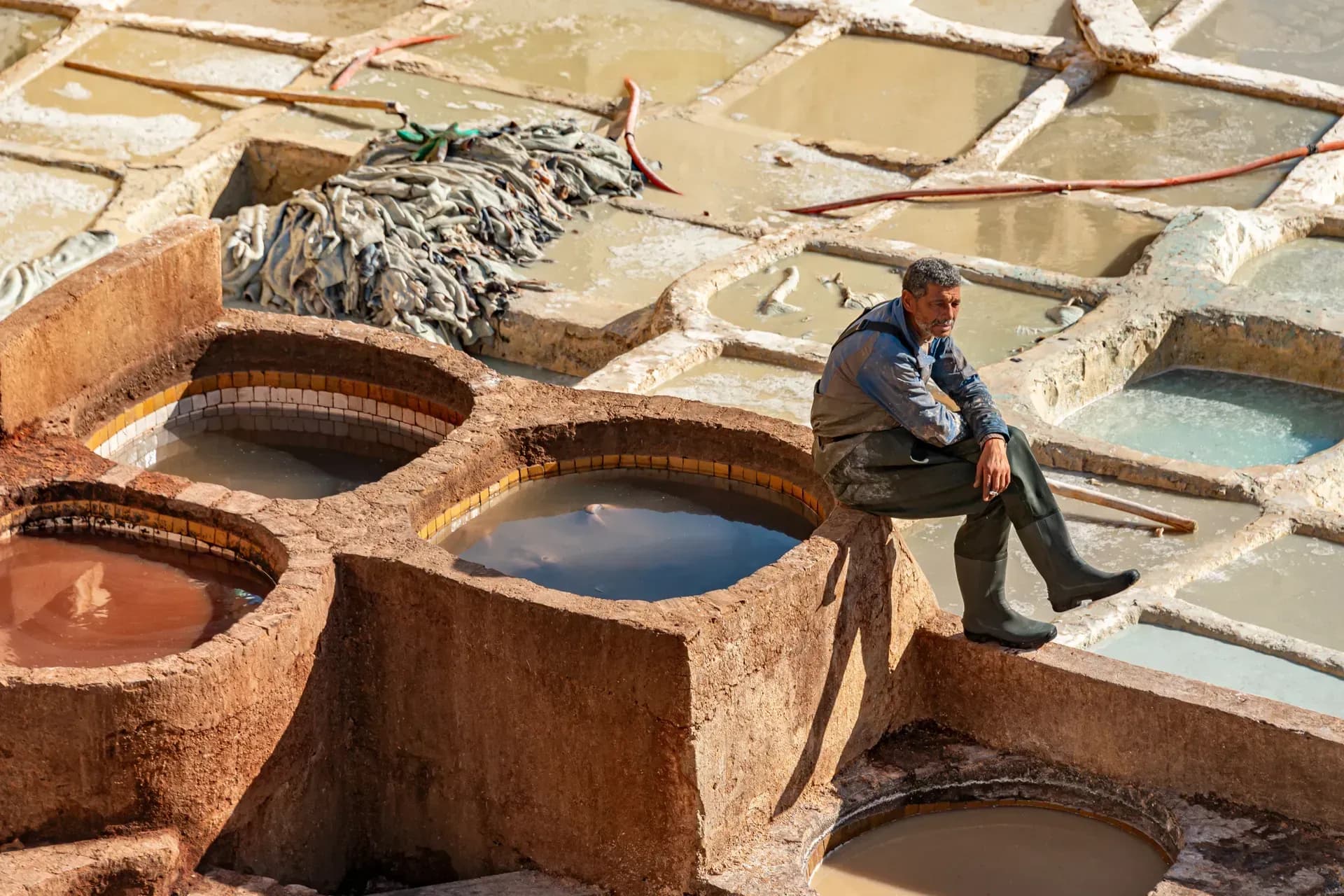
Fez, Marruecos: la guía sincera sobre la medina más antigua del mundo (y si merece la pena visitarla)
Leer la guía histórica completa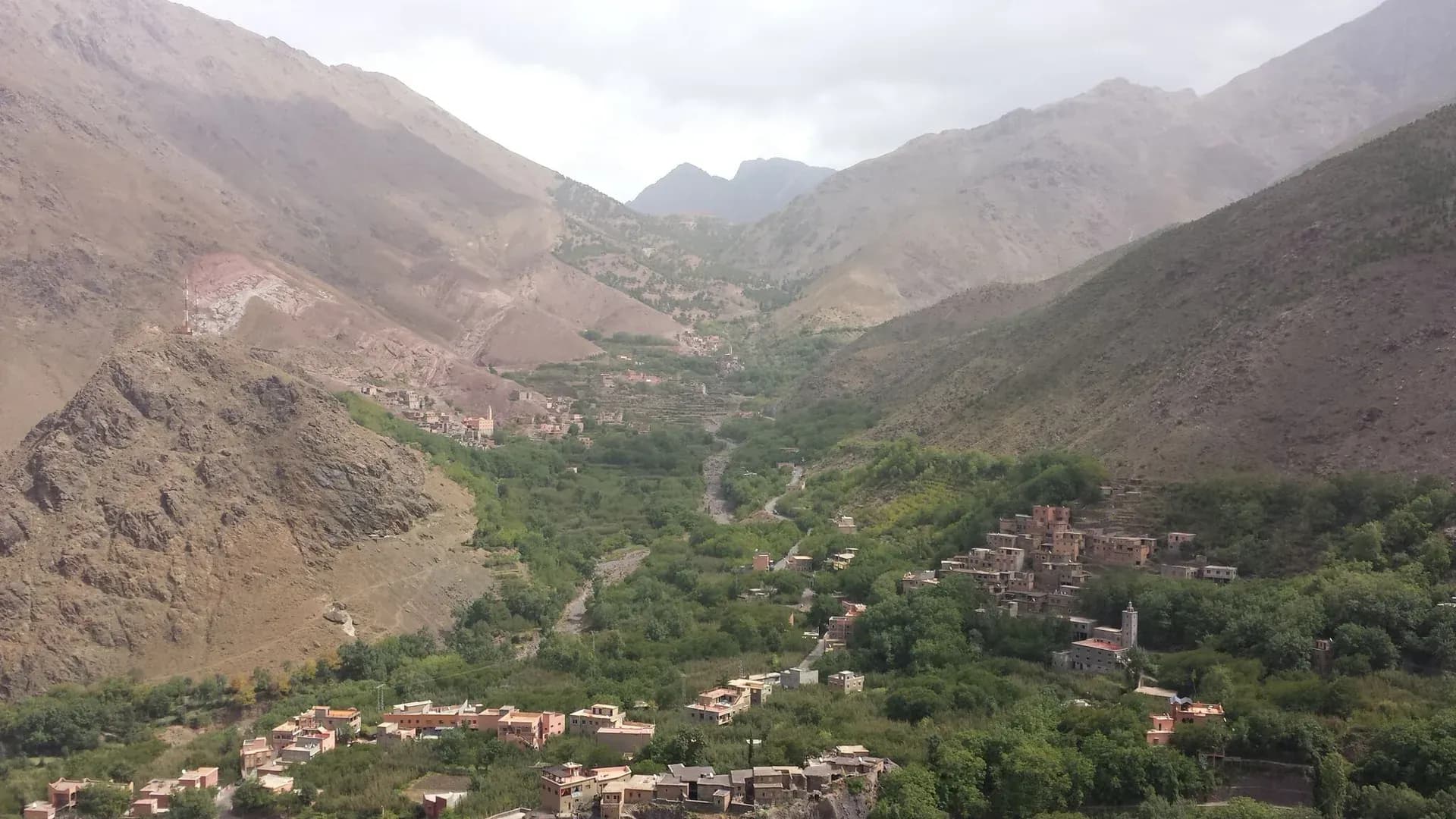
Itinerario de 7 días por Marruecos: la forma más realista de pasar una semana (desierto, Atlas y costa)
Leer la guía histórica completa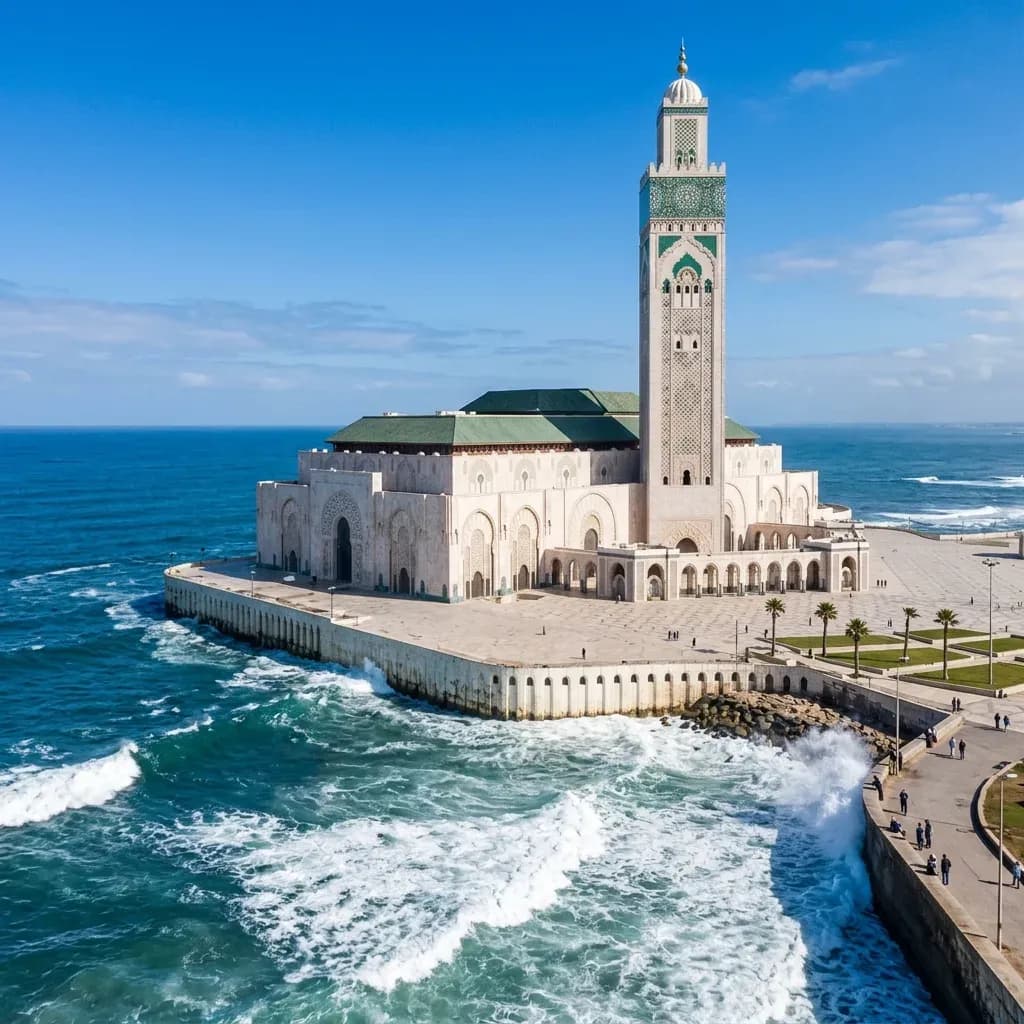
Las 8 ciudades más grandes de Marruecos: una guía sincera sobre cada una de ellas (y cuáles merecen que les dediques tiempo)
Leer la guía histórica completaPreguntas frecuentes
Are the Ouzoud waterfalls worth visiting?
Yes — if you have a day to spare. The 110m triple cascade is Morocco's best waterfall and nothing near Marrakech compares. The honest catch: it's 2.5–3 hours each way, so on a 3-day Marrakech trip we'd suggest the closer Ourika or Imlil valleys instead.
How long does it take to get from Marrakech to Ouzoud?
About 150 km, roughly 2.5–3 hours each way. Private trips leave around 08:30 and arrive before the group-tour buses (~11:00), returning to Marrakech by early evening.
Can you swim at Ouzoud waterfalls?
Yes — in the natural pools below the falls and along the river. The water is cold year-round; most visitors dip their feet and take the boat instead. Quieter pools are downstream of the main path.
Is Ouzoud free to visit?
The site is free. You pay only for extras: the rowboat to the falls' base (a few dirhams), lunch on the terraces, and small stalls. No ticket booths, no entrance fee.
Are the monkeys at Ouzoud dangerous?
The Barbary macaques are wild but habituated — they'll approach for food, which is exactly why you shouldn't feed them. They don't attack people who keep snacks packed; they do grab at open bags and hands that feed them.
Visita estos lugares en una excursión privada
Descubre los lugares emblemáticos que aparecen en esta guía con nuestros conductores profesionales con licencia, servicio de recogida puerta a puerta en el hotel y vehículos 100 % privados con aire acondicionado.
Excursión de un día a las cataratas de Ouzoud desdeMarrakech: las cataratas más altas de Marruecos y los macacos de Berbería
Escapada privada al Medio Atlas: cascada de tres niveles de 110 m; paseo en barco hasta la base de la cascada; macacos de Berbería en libertad; almuerzo en una terraza con vistas a la cascada; niebla arcoíris
Excursión de un día al valle de Ourika desde Marrakech: cascadas de Setti Fatma y pueblos bereberes
Escapada privada al Alto Atlas · Cooperativa de aceite de argán · Té a la menta en una casa bereber · Excursión opcional a la cascada de Setti Fatma · Tajín a orillas del río · Lunes: zoco de Tnin Ourika
Excursión de un día a Imlil desde Marrakech: pueblos del Alto Atlas, Armed y el monte Toubkal
Escapada privada a la montaña · Gargantas de Moulay Brahim · Valle de Asni · Paseo guiado por un pueblo bereber · Aldea Armeda · Vistas a la Kasbah del Toubkal · Almuerzo con una familia bereber incluido